The art form
Meke: how Fijian dance carries a story
What the word means, who danced it, what it was made to record and why a legend told through movement is an old Fijian habit and not a tourist invention.
Find my night ↗Quick answer
Meke is the Fijian word for traditional dance, and it carries stories as much as steps. Wikipedia places it at celebrations and festivals, and its Fiji culture article says a meke usually retells an event that mattered, such as a battle or a chief taking office. A show that tells a legend through dance is working in that long tradition, even when it adds contemporary movement.
The word and what it covers
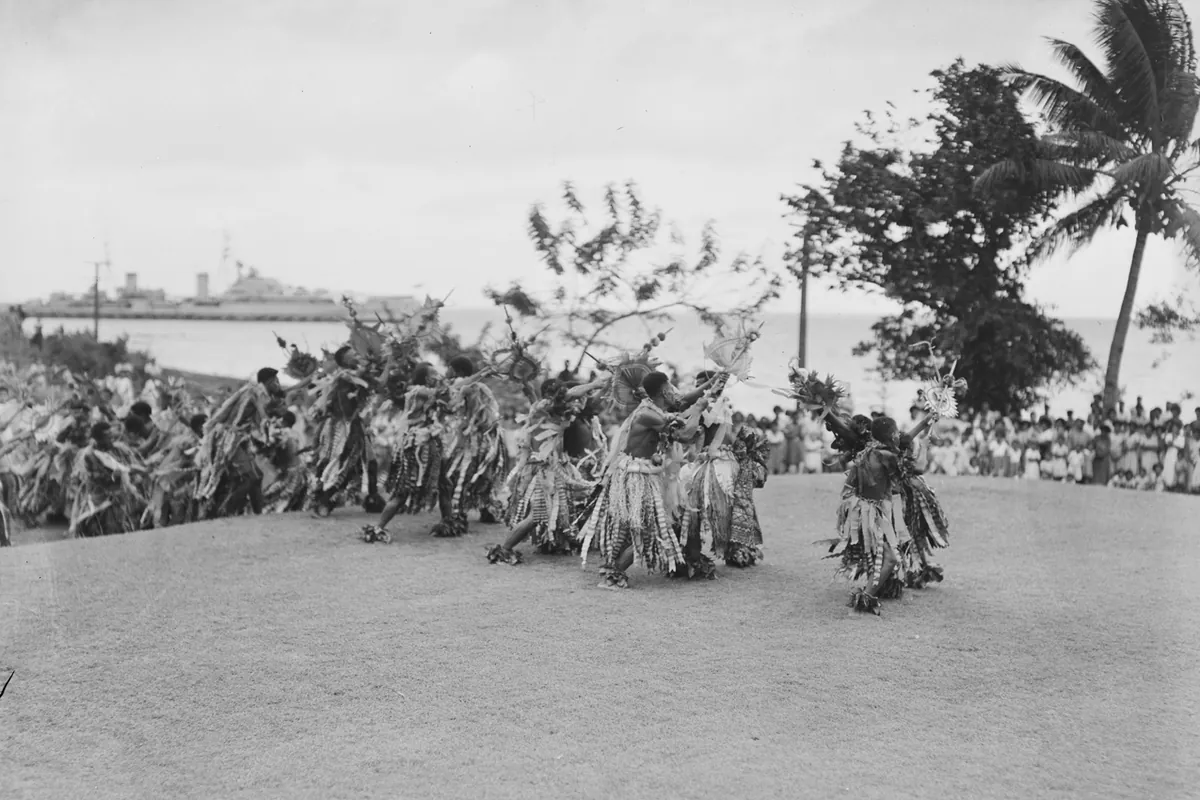
In the Fijian language, meke means a traditional style of dance, according to the Wikipedia article on the form, which says it is related to words for dance in Tongan and Samoan. It is performed at celebrations and festivals. The same article quotes an 1896 account by Friedrich Ratzel, who wrote that the Fijian meke is song and dance together, and that few people are gifted enough to invent one. In his telling, those inventors claimed to compose in the spirit world, where divine beings teach them the song. That line is worth keeping in mind when you watch any show built on the form. A meke is not a loose collection of steps. It is a piece with words, music and movement that belong together, and in the older view it was something received as much as composed.
Who danced, and what they told
The Wikipedia article on meke says the dances were traditionally danced in single-sex groups, all men or all women. The longer Wikipedia article on the culture of Fiji adds that the meke can be a women's fan dance, called seasea, or a men's spear dance, called meke wesi. It says mekes usually retell something that mattered to a community, whether a battle, the installation of a chief or a scandal, that the oldest are inherited as oral history and that fresh ones are composed for occasions. That is the practical difference between a meke and a floor show. A floor show offers rhythm and costume. A meke is meant to hold a memory: who fought, who was installed, what happened and why it mattered. When a company like VOU puts a legend on stage, the dancers are using a vehicle that Fijians have used for a long time.
Every district has its own
One fact from the Fiji culture article explains why no two companies will give you the same night. It says each district has its own form of meke, performed in the local dialect. Fiji's society is organised in villages, clans and tribes, with chiefs presiding, and each carries its own stories. A meke from one district is therefore not a template for another, and a contemporary company that gathers young dancers from different places will bring several traditions into one room. The article also describes the composer's role. In older times, it says, the composer, called the dau ni vucu, sometimes went into a trance before a performance, and the meke was considered an oracle from the gods. That is history, and a modern tourist show will not claim to repeat it. It is, however, part of why dance in Fiji has weight beyond decoration.
Old chant, new movement
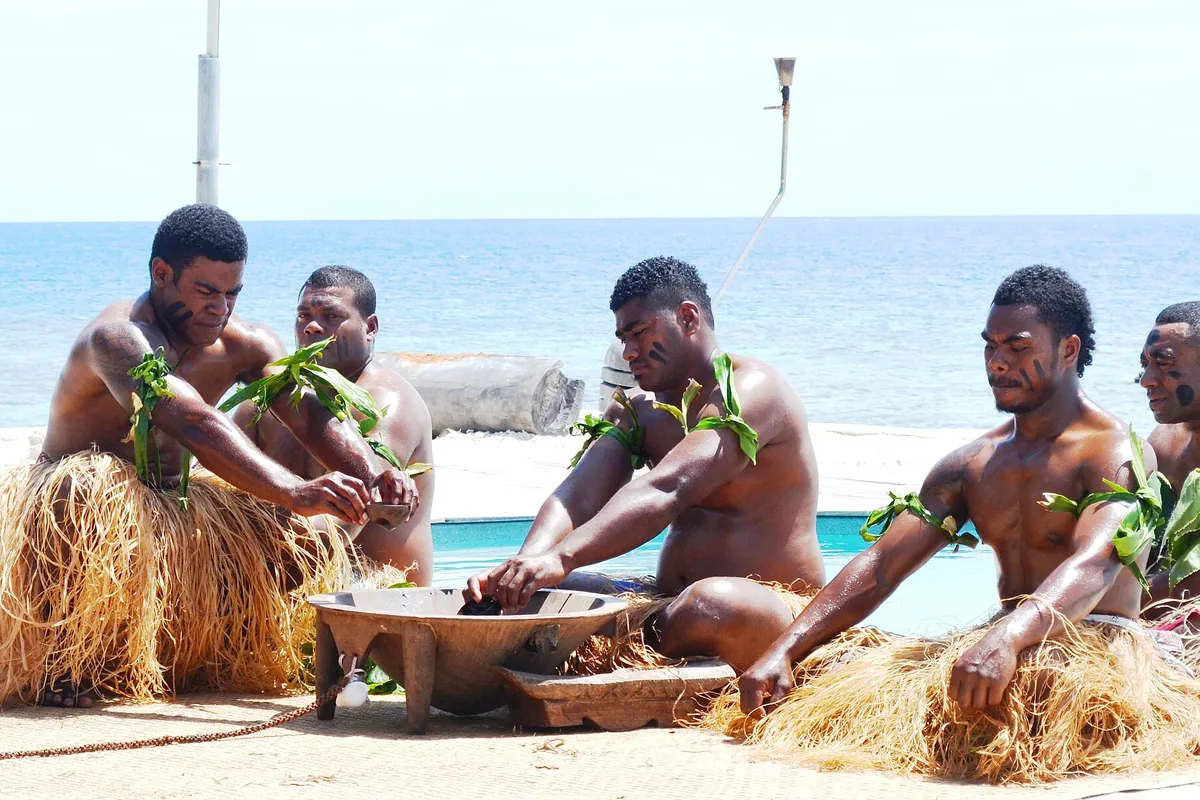
Old Fijian music consisted of chants that told stories or preserved information to hand down across generations, accompanied by traditional instruments, according to the culture article. Later influences from Europe and Asia added songs in Fijian, Indian and English, and some artists now mix all three languages. A company that describes its work as traditional storytelling in contemporary dance and music, as VOU does on its festival artist page, is therefore working in a layered tradition, not breaking a pure one. If you want to prepare for the evening, listen for the drum first, watch what the dancers' hands and feet do together, and notice when the telling stops being literal and becomes symbolic. A giant woman, an octopus god and a shape-shifting iguana, the figures the booking page names, are the sort of images a spoken story carries easily and a dancer can carry by posture alone.
Frequently asked questions
Is meke only a men's dance?
No. Wikipedia describes a women's fan dance, the seasea, and a men's spear dance, the meke wesi. Traditionally groups were all men or all women.
Does every meke tell a story?
The sources say a meke usually retells an event that mattered to a community; the oldest are inherited and newer ones are composed for occasions.
Sources