The drums
The lali and the drums of Fiji: what a drummed welcome means
The wooden slit drum behind a Fijian drumming welcome: how it is made, how it is played, what it once signalled and why it still gathers people together.
Find my night ↗Quick answer
The lali is a wooden slit drum from Fiji, carved from a single resonant log and played mostly with sticks. Wikipedia says it is used today to gather communities, such as for church services, and to entertain guests at resorts. A drumming welcome at an evening show therefore does the job the drum has always done: it tells people the gathering is about to begin.
What the drum is
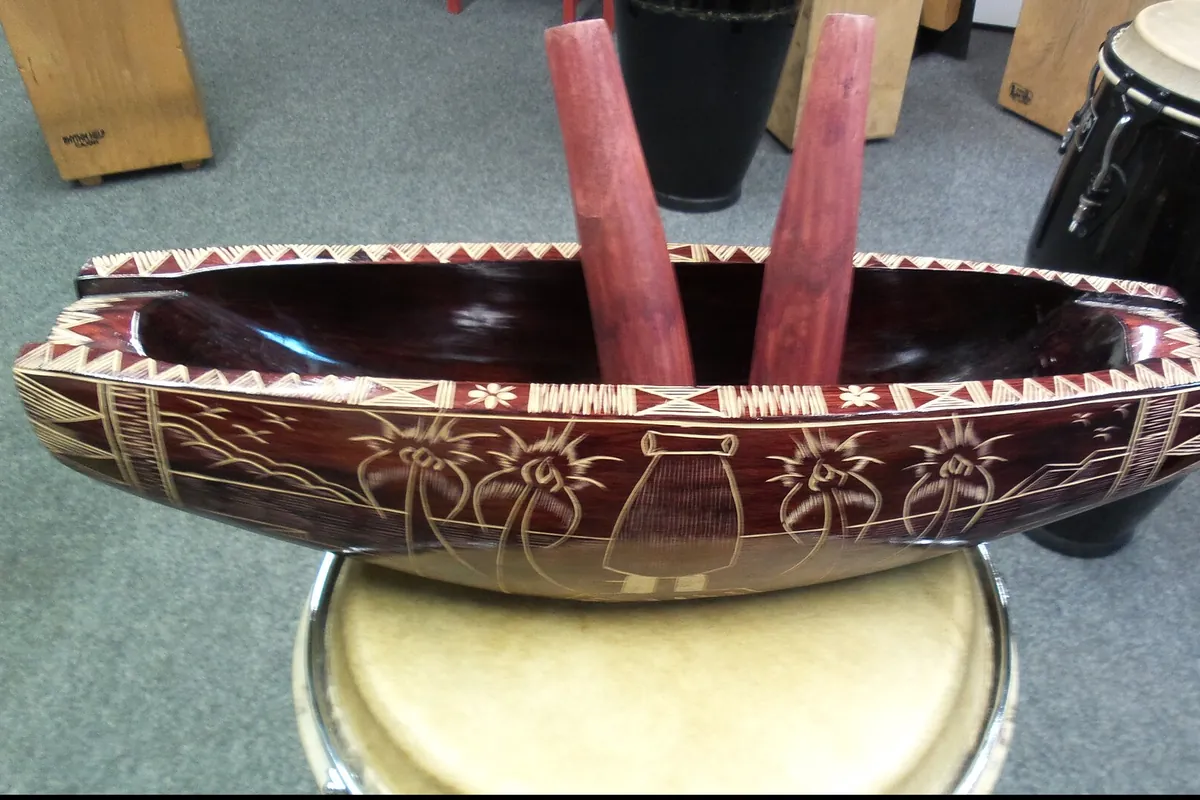
Wikipedia describes the lali as an idiophone, a wooden slit drum from Fiji, similar to the pate drums found across Polynesia in Tahiti and Samoa. It is carved from resonant timber. The article names ta vola and dilo as common choices, and says sacred drums for spirit houses used vesi. A slit drum has no skin. The sound comes from the wood itself, which is hollowed so that its walls vibrate when struck, and the pitch depends on the size and shape of the log. That explains why the sound carries. A lali is built to be heard across a village and beyond, not to accompany a quiet song.
How it is played
According to the Wikipedia article, the lali is played mainly with the hands in some settings, but sticks, called i uaua, are the most common. The sticks are made of softer wood so they do not damage the drum. Historically, players used a larger and a smaller stick together. Drums were often made in pairs, one smaller than the other, and played in counterpoint, something the article says is rare today. If you hear drumming at the start of Fiji Untold, listen for that interplay. Even a single player can alternate a heavy stroke with a lighter one, and two players can answer each other. The booking page does not say which drums the performers use, so this guide does not claim they are lali, but the form is the one that Fijian drumming grew from.
Signals, church and resorts
The same article says portable war drums, the lali ni valou, had two or three resonating chambers and relayed complex signals across a battlefield, while a smaller version, the lali ni meke, is used in music. It adds that today lali are used to gather communities, for example for church services, and to entertain guests at hotel resorts. Special structures called bure ni lali were built to keep rain out of the drum and off the drummers. So a drum has been a messenger, a summons and a musician in turn. When a company opens a night with drumming, it borrows the summons: a sound that says stop, listen, the evening is starting. That is a more specific job than background music, and it is why a drummed welcome often feels like a real beginning rather than a prelude.
Listening with a plan
You do not need training to enjoy the drums, but three small habits help. Notice where the sound seems to come from, because a slit drum has a bright, woody attack that is easy to locate. Notice the gaps between strokes, since much of the pattern lives in the silence. And notice what the dancers do on the beat and off it. In a form where the music and the movement carry a story together, the drum is closer to a narrator than an accompanist. If you want to take a piece of it home, a carved lali or a small kava bowl is a more fitting souvenir than a mass-produced trinket. Ask where it was made and who made it.
Frequently asked questions
Is a lali the same as a drum with a skin?
No. A lali is a wooden slit drum, hollowed from a log with no skin, and the sound comes from the wood.
Will I be asked to play?
The booking page mentions a drumming welcome. It does not say that guests play, so ask the seller if you want to join in.
Sources